Programmatic Advertising Unveiling Digital Efficiency
Programmatic Advertising has revolutionized the way marketers engage with digital audiences, streamlining the process of ad buying and placement through automation and advanced technology. This innovative approach not only enhances targeting precision but also optimizes real-time bidding strategies, making it a cornerstone of modern digital marketing. With roots tracing back to the early 2000s, programmatic advertising has rapidly evolved, leveraging sophisticated algorithms and data analytics to deliver personalized advertising experiences.
As we delve deeper into this topic, we will explore the various dimensions of programmatic advertising, including its types, benefits, processes, and the challenges faced in implementation. Additionally, we will examine future trends, measurement methodologies, and real-world case studies that illustrate the efficacy and evolving nature of programmatic strategies in the digital landscape.
![[技巧] 在 Chrome 上一键切换搜索引擎 - 软餐](https://us.iphone15userguide.com/wp-content/uploads/2025/08/og-img-220x150.jpg)

Introduction to Programmatic Advertising
Programmatic advertising represents a revolutionary approach to digital marketing, leveraging technology to automate the buying and selling of advertising space in real-time. This method significantly enhances the efficiency and effectiveness of ad campaigns by allowing advertisers to target specific audiences with precision, thereby maximizing return on investment (ROI) and minimizing wasted ad spend.The evolution of programmatic advertising can be traced back to the early 2000s when early forms of automated ad buying began to surface.
Initially focused on direct response campaigns, the technology has since grown into a sophisticated ecosystem involving demand-side platforms (DSPs), supply-side platforms (SSPs), and ad exchanges, transforming how digital ad inventory is bought and sold. The introduction of data analytics and machine learning has further accelerated this evolution, enabling advertisers to make data-driven decisions in real-time.
Technology That Powers Programmatic Advertising
The backbone of programmatic advertising lies in several key technologies that facilitate the real-time buying and selling of ad space. These technologies not only streamline processes but also enhance targeting capabilities, allowing advertisers to reach their desired audience effectively.The primary components of programmatic advertising technology include:
- Demand-Side Platforms (DSPs): These platforms enable advertisers to purchase ad space using algorithms that optimize the ad placements based on the desired audience and budget.
- Supply-Side Platforms (SSPs): SSPs assist publishers in managing their ad space inventory and maximizing revenue by connecting them with multiple ad exchanges.
- Ad Exchanges: These are online marketplaces where advertisers and publishers can buy and sell ad space in real-time through auction systems, ensuring competitive pricing and availability.
- Data Management Platforms (DMPs): DMPs collect and analyze data from various sources, allowing advertisers to create detailed audience profiles and improve targeting strategies.
- Real-Time Bidding (RTB): RTB is a key mechanism of programmatic advertising, allowing advertisers to bid on ad impressions in real-time, ensuring that the most relevant ads reach the right users.
The integration of these technologies enables a seamless advertising experience, where real-time data and insights drive strategic decisions. The impact of programmatic advertising on the marketing landscape has been profound, paving the way for more personalized and efficient advertising practices that cater to the needs of both advertisers and consumers.
“The integration of technology in advertising not only optimizes campaigns but also enhances the overall consumer experience.”
Types of Programmatic Advertising
Programmatic advertising has revolutionized the way digital ads are bought and sold. It automates the ad purchasing process, which not only saves time but also allows for more precise targeting of audiences. Understanding the various types of programmatic advertising is essential for businesses aiming to maximize their advertising efforts in a rapidly evolving digital landscape.The main types of programmatic advertising include Real-Time Bidding (RTB) and Programmatic Direct.
Each of these methods holds distinct characteristics and utility, making them suitable for different advertising strategies and goals. Below, we will examine these types, highlighting their features and providing examples of platforms that utilize them.
Real-Time Bidding (RTB)
Real-Time Bidding is a process where advertising inventory is bought and sold on a per-impression basis through an auction that occurs in the milliseconds before a webpage loads. This approach allows advertisers to bid on specific audiences based on various targeting criteria. The following points elucidate the notable features of RTB:
- Automated Buying: RTB uses algorithms to automate the buying process, enabling advertisers to purchase ad space efficiently.
- Audience Targeting: Advertisers can target specific demographics, interests, and behaviors, ensuring the ads reach the right audience.
- Cost Efficiency: Bidding allows advertisers to set their prices, often resulting in more cost-effective advertising strategies.
- Dynamic Ad Delivery: Ads can be adjusted in real-time based on performance metrics, optimizing campaigns on the fly.
Prominent platforms utilizing RTB include Google Ads, The Trade Desk, and AdRoll, all of which facilitate real-time auctions and provide sophisticated targeting capabilities.
Programmatic Direct
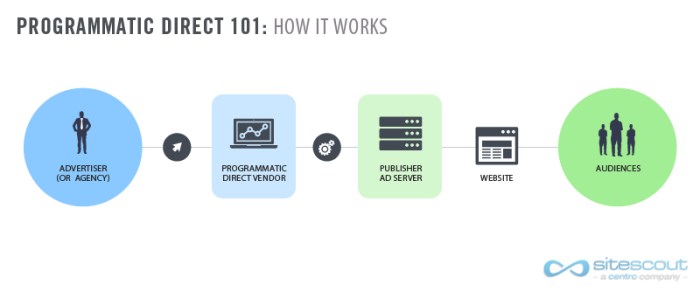
Programmatic Direct, on the other hand, involves the automated buying and selling of advertising inventory without the auction process. This method typically involves a direct deal between the publisher and the advertiser. The key characteristics of Programmatic Direct include:
- Guaranteed Inventory: Advertisers secure ad placements in advance, ensuring that they have access to specific inventory.
- Less Competition: Since the purchasing is done directly, there are fewer competitors for the same ad space, reducing the unpredictability of costs.
- Brand Safety: Programmatic Direct allows advertisers to choose specific websites or apps, enhancing brand safety and ensuring that ads appear in suitable environments.
- Fixed Pricing: Advertisers typically agree on a price beforehand, simplifying budgeting and expenditure tracking.
Platforms such as Adobe Advertising Cloud and Rubicon Project facilitate Programmatic Direct transactions, providing advertisers control over their inventory and ensuring successful campaign executions.
| Feature | Real-Time Bidding (RTB) | Programmatic Direct |
|---|---|---|
| Buying Method | Per-impression auction | Pre-negotiated agreements |
| Cost Structure | Variable, based on bids | Fixed pricing |
| Ad Placement | Dynamic, based on audience | Guaranteed inventory |
| Targeting Capabilities | Advanced audience targeting | Site-specific targeting |
| Brand Safety | Variable, dependent on auction | High, due to direct deals |
Benefits of Programmatic Advertising

Programmatic advertising offers a multitude of advantages for marketers and advertisers alike. As the digital landscape continues to evolve, utilizing automated processes to buy and sell ad space becomes increasingly vital for achieving effective marketing strategies. The ability to leverage advanced technology not only enhances campaign performance but also optimizes resource allocation.The efficiency in targeting and real-time data usage are significant advantages of programmatic advertising.
By utilizing data-driven insights, advertisers can reach specific audience segments with precision. This targeted approach ensures that campaigns resonate with the intended audience, resulting in higher engagement and conversion rates. Real-time data analytics facilitate immediate adjustments to campaigns, maximizing effectiveness while minimizing waste.
Cost-Effectiveness of Programmatic Approaches
Implementing programmatic advertising can lead to considerable cost savings for businesses. The following points illustrate how programmatic approaches prove to be financially beneficial:
- Optimized Ad Spend: Programmatic platforms allow for precise targeting, ensuring that ad budgets are allocated to the most relevant audiences, thereby increasing the return on investment (ROI).
- Reduced Human Errors: Automation minimizes the chances of mistakes in ad placement and bidding strategies, which can lead to unnecessary expenditures.
- Real-Time Bidding Efficiency: Advertisers can bid in real-time for ad placements, ensuring they only pay what they deem appropriate for the space, maximizing the value of each impression.
- Access to Diverse Inventory: Programmatic advertising offers access to a broad spectrum of ad inventory across various platforms and devices, increasing visibility without the need for extensive negotiations.
- Scalability: Campaigns can be easily scaled up or down based on performance metrics, allowing for better control over marketing budgets and objectives.
“The power of programmatic advertising lies in its ability to connect data, technology, and media to create highly effective marketing campaigns.”
Programmatic Advertising Process
The programmatic advertising process is a complex and dynamic ecosystem that facilitates the buying and selling of digital ad space through automated technology. This system enhances efficiency, allowing marketers to reach their target audiences more effectively and in real-time. Understanding the steps involved in this process is crucial for stakeholders to maximize their advertising efforts.The programmatic advertising workflow can be broken down into several stages, each involving different technologies and players.
From initial ad buying to the final ad serving, each step plays a vital role in ensuring that the right message reaches the right audience at the right time.
Step-by-Step Process of Programmatic Advertising
The programmatic advertising process consists of several key steps that illustrate how ads are bought, auctioned, and served to users. Below are the primary steps involved:
- Ad Inventory Availability: Publishers make their ad inventory available through ad exchanges, where they list the spaces that can be filled by advertisers.
- Demand-Side Platforms (DSP): Advertisers use DSPs to set parameters for their campaigns, including targeting criteria, budget, and bid strategies.
- Ad Auction: When a user visits a website, an auction takes place in milliseconds for the available ad space, where advertisers bid for the impression based on user data and campaign settings.
- Winning Bid Selection: The ad exchange selects the winning bid based on various factors, including the highest bid and relevance to the user profile.
- Ad Serving: The winning ad is served to the user in real-time, completing the cycle.
The efficiency of this process hinges on the seamless interaction of multiple stakeholders, each playing a critical role in programmatic advertising.
Stakeholders in Programmatic Advertising
The programmatic advertising ecosystem comprises various stakeholders, each contributing unique expertise to the overall process. Their roles are crucial for ensuring successful ad placements and maximizing the return on investment. The key stakeholders include:
- Advertisers: These are brands or agencies looking to promote their products or services.
- Publishers: Website owners or platforms that provide ad space for advertisers.
- Ad Exchanges: Marketplaces that facilitate the buying and selling of ad inventory between advertisers and publishers.
- Demand-Side Platforms (DSPs): Technologies used by advertisers to purchase ad space programmatically.
- Supply-Side Platforms (SSPs): Technologies that help publishers manage their ad space and maximize revenue.
- Data Management Platforms (DMPs): Systems that collect and analyze consumer data to enhance targeting efforts.
Each stakeholder’s collaboration ensures that programmatic advertising runs smoothly, allowing for optimized ad delivery and performance tracking.
Technology Stack in Programmatic Advertising
The programmatic advertising process relies on a sophisticated technology stack that supports various functions, from data analysis to ad serving. Below is a table illustrating the components of this technology stack:
| Component | Function |
|---|---|
| Ad Exchange | Facilitates real-time bidding and ad inventory trading between buyers and sellers. |
| Demand-Side Platform (DSP) | Allows advertisers to manage and optimize their ad buys across multiple exchanges. |
| Supply-Side Platform (SSP) | Enables publishers to manage their ad inventory and maximize revenue through auctions. |
| Data Management Platform (DMP) | Collects and analyzes data to inform targeting strategies and audience segmentation. |
| Ad Server | Delivers ads to users and tracks performance metrics in real-time. |
The integration of these technologies into the programmatic advertising workflow enhances both the efficiency of ad purchases and the effectiveness of campaigns, ultimately leading to better outcomes for all stakeholders involved.
Challenges in Programmatic Advertising

Programmatic advertising has transformed the advertising landscape by automating the buying and selling of ad inventory. However, businesses face several challenges when implementing this technology. Understanding these challenges is crucial for successfully navigating the programmatic landscape and ensuring effective advertising strategies.The complexities of programmatic advertising can lead to various obstacles that businesses must address. Among these challenges are ad fraud, data privacy concerns, technology integration issues, and the need for skilled personnel.
Partnering with a reputable Digital Marketing Agency can be transformative for your brand’s online presence. These agencies offer expertise in crafting tailored marketing strategies, ensuring that your brand reaches its target audience effectively. With their support, businesses can navigate the complexities of the digital landscape and achieve sustainable growth.
Each of these factors can significantly impact the effectiveness and efficiency of programmatic ad campaigns.
Ad Fraud and Its Mitigation
Ad fraud remains one of the most pressing issues in programmatic advertising. It involves malicious activities designed to exploit the digital advertising ecosystem, resulting in financial losses for advertisers. Ad fraud can take various forms, including fake impressions, click fraud, and bot traffic.To combat ad fraud, businesses can adopt several strategies:
- Utilizing Verification Tools: Implementing third-party verification services can help detect fraudulent activities in real-time, ensuring that ads are served to genuine users.
- Employing Whitelists and Blacklists: Creating whitelists of approved publishers and blacklisting known fraudulent sources enhances quality control and reduces exposure to fraudulent inventory.
- Implementing Viewability Standards: Setting standards for ad viewability ensures that ads are only counted when genuinely seen by users, thus reducing wasted ad spend.
- Investing in Anti-Fraud Technology: Leveraging advanced technologies such as artificial intelligence (AI) and machine learning can help identify and predict fraudulent patterns, making it easier to combat these challenges.
Overcoming Complexities in Programmatic Ad Buying
The intricacies of programmatic ad buying can create hurdles for businesses, including the need for sophisticated technology and the challenge of managing multiple platforms. A well-structured approach can simplify these complexities:
- Centralized Technology Platforms: Utilizing a unified programmatic platform can streamline the ad buying process, allowing for better management of campaigns across various channels.
- Data Management Platforms (DMPs): Implementing DMPs enables businesses to collect and analyze customer data effectively, facilitating better-targeted advertising and enhanced user engagement.
- Continuous Education and Training: Investing in training programs for marketing teams can equip them with the skills needed to navigate the programmatic landscape confidently.
- Collaborative Partnerships: Building partnerships with experienced programmatic vendors allows businesses to leverage industry expertise, ensuring campaigns are optimized for success.
The landscape of programmatic advertising is continuously evolving, and addressing these challenges is essential for businesses to maximize their advertising efforts while minimizing risks and inefficiencies.
Future Trends in Programmatic Advertising
The landscape of programmatic advertising is continuously evolving, driven by advancements in technology and changing consumer behaviors. As advertisers seek more efficient and effective ways to reach their target audiences, several emerging trends and innovations are shaping the future of this dynamic field. Understanding these trends is vital for marketers aiming to stay competitive and maximize the impact of their advertising efforts.One of the most significant influences on programmatic advertising is the integration of artificial intelligence (AI) and machine learning.
These technologies are not only enhancing the efficiency of ad buying processes but also improving targeting precision. By analyzing vast amounts of data in real-time, AI algorithms can optimize ad placements and creative strategies based on user behavior and preferences. This leads to increased engagement rates, as ads become more relevant to the audience.
Emerging Trends and Innovations in Programmatic Advertising
Several key trends are shaping the future of programmatic advertising, highlighting the direction in which the industry is headed. These trends underscore the importance of adapting to technological advancements and shifting consumer expectations.
- Increased Adoption of AI and Machine Learning: The use of AI-driven tools is revolutionizing how advertisers analyze data and make decisions. Enhanced predictive analytics allows marketers to forecast trends and consumer behavior with greater accuracy.
- Programmatic Direct: This trend involves automating the process of direct deals between advertisers and publishers, ensuring greater transparency and efficiency in transactions.
- Integration of Cross-Channel Strategies: Advertisers are increasingly leveraging cross-channel approaches, integrating programmatic advertising across multiple platforms such as social media, display networks, and video advertising.
- Focus on Privacy and Data Compliance: With growing concerns over data privacy, programmatic advertising is evolving to comply with regulations like GDPR and CCPA, emphasizing the need for greater transparency and user consent.
- Advancements in Creative Technology: Innovations in ad creative, such as dynamic creative optimization (DCO), allow for more personalized ads that adapt based on user interactions and preferences.
The impact of AI and machine learning on programmatic strategies cannot be overstated. These technologies enable advertisers to automate and optimize campaigns with significant efficiency. For instance, AI can analyze user engagement patterns to determine the most effective ad placements and formats, ultimately leading to improved ROI.
In today’s competitive landscape, employing effective Marketing Automation Tools can significantly enhance your business efficiency. These tools streamline various marketing tasks, allowing teams to focus on strategy and creativity. By optimizing customer interactions, they pave the way for improved engagement and higher conversion rates.
Predictions for the Future of Programmatic Advertising
Looking ahead, several predictions can be made regarding the evolution of programmatic advertising. As the industry adapts to technological advancements and consumer trends, these forecasts offer valuable insights for marketers.
- Increased Market Share of Programmatic Advertising: As more advertisers recognize the benefits of programmatic strategies, its market share is expected to grow significantly, potentially surpassing traditional advertising methods.
- Enhanced Personalization and Targeting: Future campaigns will prioritize hyper-personalized advertising experiences, utilizing data and AI to tailor messages for individual users based on their behaviors and preferences.
- Greater Emphasis on Transparency: There will be a stronger push for transparency in the programmatic ecosystem, with advertisers demanding clearer insights into data usage, targeting practices, and campaign performance.
- Development of Innovative Ad Formats: The emergence of new ad formats, such as augmented reality (AR) and interactive video ads, will provide fresh opportunities for engagement and brand storytelling.
- Integration with Emerging Technologies: Programmatic advertising will increasingly integrate with technologies such as blockchain to enhance security, reduce fraud, and improve data management.
As the digital advertising landscape continues to evolve, staying attuned to these trends and leveraging the capabilities of AI and machine learning will be crucial for marketers aiming to thrive in the future of programmatic advertising.
Measuring Success in Programmatic Advertising
Measuring the effectiveness of programmatic advertising campaigns is crucial for understanding their impact and optimizing future efforts. With the ability to track real-time data and engagement metrics, advertisers can assess how well their campaigns are performing against set objectives. This process involves various methods and key performance indicators (KPIs) that provide insights into campaign success.Essential to the measurement of programmatic advertising campaigns are specific KPIs that help to evaluate performance.
These KPIs enable marketers to pinpoint areas of strength and opportunities for improvement.
Key Performance Indicators in Programmatic Advertising
Understanding which KPIs to monitor is essential for determining the success of programmatic advertising efforts. The following KPIs are particularly relevant:
- Click-Through Rate (CTR): This metric indicates the percentage of users who click on an ad after viewing it, reflecting the ad’s effectiveness in generating interest.
- Cost Per Acquisition (CPA): This KPI measures the cost of acquiring a customer through the campaign, providing insights into the campaign’s efficiency.
- Return on Ad Spend (ROAS): This metric calculates the revenue generated for every dollar spent on advertising, essential for assessing profitability.
- Impressions: This indicates the total number of times an ad is displayed, crucial for understanding reach and visibility.
- Viewability Rate: This measures the percentage of ads that are actually seen by users, ensuring that impressions translate into visible opportunities.
- Conversion Rate: This measures the percentage of users who complete a desired action after engaging with the ad, vital for evaluating effectiveness.
Comparison of Measurement Tools
Various tools are available for measuring the performance of programmatic advertising campaigns, each with distinct features. Below is a comparative overview of some popular measurement tools.
| Tool | Features | Best For |
|---|---|---|
| Google Analytics | Website traffic analysis, conversion tracking, and user behavior reports. | All-around performance tracking and analytics. |
| Adobe Analytics | Cross-channel attribution, detailed segmentation, and advanced data visualization. | Advanced marketers needing in-depth analysis. |
| AdRoll | Retargeting capabilities, multi-channel tracking, and performance insights. | Brands focusing on retargeting and customer re-engagement. |
| Moat by Oracle | Ad viewability measurement, attention metrics, and competitive insights. | Brands needing detailed attention and viewability metrics. |
| Facebook Ads Manager | Performance tracking for campaigns on Facebook and Instagram, audience insights. | Advertisers focused on social media performance. |
Barriers to effective measurement can include data discrepancies, lack of integration across platforms, and the challenge of attributing conversions accurately. However, leveraging the right tools and KPIs allows advertisers to gain valuable insights and enhance the overall impact of programmatic advertising campaigns.
Case Studies in Programmatic Advertising
Successful programmatic advertising campaigns provide valuable insights into effective strategies, showcasing how brands can leverage data and technology to achieve remarkable results. These case studies illustrate the different approaches and tactics utilized by various companies, revealing the lessons learned and key takeaways that can be applied to future campaigns.One notable case study illustrates the effectiveness of programmatic advertising by a leading retail brand.
The campaign aimed to increase online sales during a major holiday season. By using a combination of real-time bidding and data-driven insights, the brand was able to target specific audience segments more efficiently. This campaign resulted in a 30% increase in conversion rates compared to previous holiday seasons.
Successful Retail Campaign: Case Study Overview
The retail brand implemented a multi-channel programmatic strategy that included display, video, and social media advertising. The approach was rooted in audience segmentation and behavioral targeting, which enabled the brand to reach potential customers who were most likely to engage with their products.The following elements contributed to this campaign’s success:
- Data Analytics: Utilizing customer data to understand shopping behaviors and preferences allowed for precise audience targeting.
- Dynamic Creative Optimization: The brand utilized dynamic ads that adapted in real-time based on user interactions, enhancing engagement.
- Cross-Channel Integration: Executing ads across various platforms ensured consistent messaging and reinforced brand recognition.
Key takeaways from this case include the importance of leveraging data analytics for audience targeting, optimizing creative assets in real time, and maintaining a cohesive brand message across channels.
Automotive Industry Success: Highlights and Insights
In another illustrative case, a major automotive manufacturer launched a programmatic campaign to promote a new vehicle model. The company focused on reaching a targeted audience of potential car buyers through extensive data analysis and audience profiling.Significant factors that contributed to the success of this campaign include:
- Geo-Targeting: The campaign utilized location data to display ads to users in specific geographic areas where dealerships were located, resulting in increased foot traffic.
- Retargeting Strategies: By retargeting users who had previously visited the manufacturer’s website, the campaign saw higher engagement rates and improved conversion.
- Interactive Ad Formats: Incorporating video and interactive formats captivated the target audience, leading to longer engagement times.
The automotive case study underscores the significance of geo-targeting, the effectiveness of retargeting efforts, and the impact of engaging ad formats to capture audience attention.
The effectiveness of programmatic advertising is amplified when brands focus on data-driven strategies and engage audiences through tailored messages.
Through these case studies, it is evident that successful programmatic advertising relies on a well-thought-out strategy that combines data analytics, creative optimization, cross-channel integration, and audience engagement. These insights serve as a valuable guide for brands looking to enhance their future programmatic advertising campaigns.
End of Discussion
In conclusion, Programmatic Advertising stands as a transformative force within the digital marketing realm, offering unparalleled opportunities for efficiency and effectiveness in reaching target audiences. As technology continues to advance, the potential for innovation within programmatic strategies will only grow, underscoring the importance for marketers to stay informed and adaptable. By understanding the complexities and leveraging the advantages of programmatic advertising, businesses can ensure their campaigns resonate and yield substantial results.
Questions Often Asked
What is programmatic advertising?
Programmatic advertising is an automated process of buying and selling online ad space, allowing marketers to target audiences more effectively using data-driven insights.
How does programmatic advertising differ from traditional advertising?
Unlike traditional advertising, which often relies on manual buying and broad targeting, programmatic advertising utilizes algorithms and real-time data to optimize ad placements and reach specific audiences efficiently.
What are the key benefits of programmatic advertising?
Key benefits include enhanced targeting precision, real-time data usage, cost-effectiveness, and improved campaign performance metrics.
What challenges are associated with programmatic advertising?
Common challenges include ad fraud, data privacy concerns, and the complexity of managing multiple platforms and technologies.
How can one measure the success of programmatic advertising campaigns?
Success can be measured through various key performance indicators (KPIs) such as click-through rates, conversion rates, and return on ad spend.